Book Review: Deadlocked, by Charlaine Harris

The Sookie Stackhouse Series, Book 12

Gollancz, 2012

Sookie’s back. Again.

Deadlocked is the penultimate book in Charlaine Harris’ Sookie Stackhouse series (the novels that spawned Alan Ball’s hit HBO TV series True Blood), and, huge fan though I was/am, I can’t help but breathe a sigh of relief at that news. What started out as an immensely enjoyable series has become a bit of a tired old beast at this point, and Harris is dancing very close to ruining a good thing. No doubt she’s aware of that fact, and perhaps is as happy as I am to finally hop off the Sookie train, fun though the ride has been.

Deadlocked finds Sookie involved in a murder mystery (again) when random were Kym Rowe is found dead on the lawn of Sookie’s vampire lover Eric Northman’s home after a bloodsucker shindig. To further complicate matters, Sookie is mixed up in fae politics (again) among her fairy kin, and all is not well in Sookie’s relationship with Eric. There’s the usual smattering of elves, demons, were-creatures, and humans-with-extras thrown into the mix, as well as the lure of the powerful fae artefact, the Cluviel Dor, left to Sookie by her grandmother.

Many of the things I love about the Sookie series are still present in Deadlocked. There’s that feeling of coming home upon opening the book and sinking back into the down-South heat of Bon Temps with a familiar and much-loved cast of characters. Harris’ writing remains accessible and consistent – even when I’m not bowled over by the book, it’s never anything less than a page-turner; I read it quickly. The shameless escapism is intact (reading the first-person accounts of Sookie’s irresistibility to all males is delightful wish-fulfillment-by-proxy), and the supernatural excitement still permeates the series…but only just.

However, there’s nothing new left under Sookie’s sun, and that’s where this series has now worn thin. It’s all been done, or so it seems. There’s nothing unplumbed in the supernatural politics and machinations of the world Harris has built. This makes Deadlocked feel like a retelling of several earlier Sookie books, cobbled together without even concealing the author’s own weariness; even Sookie seems to just be over it all. Its plot is ho-hum, the motivations of the key characters barely make sense (when the plot involving Kym Rowe’s death is explained, it’s just…silly), and I just don’t much care anymore. Also, not enough sex (or even sexiness) and vampires. The sizzling sensuality of Sookie’s previous interactions with Bill and Eric are gone, as are Bill and Eric for much of Deadlocked, and the book suffers for it. The things which always bugged me about the Sookie books – for instance, Harris’ penchant for spending large chunks of text detailing Sookie brushing her hair, washing dishes, waiting tables, peeling vegetables, running errands, etc – are still there and they’re a major issue now, because the story and vibe aren’t strong enough to compensate this time.

Overall, I did enjoy Deadlocked, because I am a fan of the Sookie series and I do love the world and characters, but I also found the novel to be one of the more disappointing ones in the series, and I’m glad it’s ending before it’s run into the ground. I’ve high hopes that the final instalment will be truly special and Sookie can go out with a bang.

Honestly, I don’t think Deadlocked‘s ultimate shortcomings can really be laid at Harris’ feet. I think she’s doing the best she can with something that maybe should’ve ended a couple of books ago. The inside back cover of Deadlocked bears the legend: “All Sookie’d Out?” and then suggests trying some of Harris’ other novels outside the world of Bon Temps. Yes, I think I just might be all Sookie’d out; but I’m not all Harris’d out. I’ll be hunting for her other books once Sookie is laid to rest. I look forward to it.

Movie Review: Dark Shadows (2012)

Directed by Tim Burton

Screenplay by Seth Grahame-Smith

Starring Johnny Depp, Michelle Pfeiffer, Eva Green, Helena Bonham-Carter, Jackie Earle Haley, Johnny Lee Miller, Chloe Grace Moretz, Bella Heathcote

Dark Shadows is a movie adaptation of the 1966-1971 American television series of the same name. It’s another Burton/Depp collaboration (like 2005’s Charlie and the Chocolate Factory and 2007’s Sweeney Todd: The Demon Barber of Fleet Street), and as Burton/Depp collaborations tend to do, it features Burton’s muse and real-life partner, Helena Bonham Carter. As a big fan of this gothic trio, I went into Dark Shadows with great expectations that were, for the most part, sadly unfulfilled.

Dark Shadows sees Depp playing Barnabas Collins, once a well-to-do New England businessman, now a 200 year old vampire cursed and buried alive for much of his undead existence by spurned witch Angelique Bouchard (Eva Green). Barnabas is dug up in 1972, and returns to the home he once knew, where his descendants now live. There he finds things are not as prosperous or harmonious as they once were, his long-lost love Josette du Pres (Bella Heathcote) may yet live (sort of), and Angelique still plays a large part in the Collins family’s ongoing troubles.

Dark Shadows has been flagged as horror comedy, but there’s no real horror here, except perhaps in the incoherency of the story-telling. There are some decent laughs, and there is Burton’s usual gaudy gothic flair, but there’s little else going for the movie, apart from an excellent cast who are completely wasted. Readers may remember Jackie Earle Haley’s riveting nihilistic performance as Rorschach in 2009’s Watchmen; in Dark Shadows, Haley plays a redundant bit-part as the Collins family’s drunken caretaker. Similarly, Michelle Pfeiffer’s delivery of Elizabeth Collins Stoddard, the family matriarch, is immaculate; yet utterly boring, because the character herself is boring. Chloe Grace Moretz, who shocked and delighted as Hit Girl in 2010’s Kick-Ass, is barely present as Carolyn Stoddard, a character who seems to exist solely to pout and appear in the finale in a “twist” that is as meaningless as it is ridiculous. I can’t comment much on Bella Heathcote’s contribution as Barnabas’ so-called love interest Josette (or her modern incarnation) because she’s simply absent in every meaningful way for pretty much the entire film. Depp and Bonham-Carter give their usual flawless performances, and Eva Green’s sultry malice is arguably a highlight of the film, but nothing can bring true gravitas to this fluffy muddle.

Perhaps I’m being a tad harsh. This is not a terrible film. The vivid visual aesthetic and surreal vibe that we’ve come to expect from Burton are still present in Dark Shadows, though not as expertly handled and delivered as in Burton’s other works. The funny parts are quite funny. There’s some real depth (at times) to the character of Angelique, particularly in the climax of the film. There’s fun to be had here – it’s a Tim Burton film, after all! – but it’s of the shallow, vaguely bewildering kind.

If you’re in the mood for some light entertainment, you could do worse than Dark Shadows. It’s not without its charm. I’d suggest you wait for the DVD, though. And maybe get drunk first.

The List by Bedford, Pop, Bonin – review

The ListThe List is a graphic novel written by Paul Bedford and illustrated by Henry Pop (pencils) and Tom Bonin (inks). It has lived through many incarnations, originally released in serial form and now available as a self-published single-volume graphic novel. It’s interesting to note that this edition was financed through crowd-funding with a successful Pozible campaign.

The List tells the story of a young man with a deep obsession. He has a list tattooed on his stomach, given to him by an angel. His father has already completed his list and reached “enlightenment” and the son must now work through as his father did. The angel drives him on, the ghost of his father lambasts his mistakes and the reader is never really sure if any of it is real or just extensive psychosis on the part of the son, Matthew.

This is the key idea behind the narrative style. Very little is given away and there’s a lot of room for interpretation, which is generally a good thing in any story. The tale is violent and powerful and does little to protect the reader from the depths of insanity surely gripping Matthew. Clearly this book has a lot of fans (given the crowd-funding success and many positive reviews) but I have to admit that I found the whole thing rather two-dimensional.

The art style is bold and stark, which works in many ways, but the consistent lack of backgrounds and the constant use of solid black or solid white in panels made the book seem stangely flat. This helps to focus on the story, but it does detract from the immersive experience you’d expect from a graphic novel. There are several pages with very little text and panel after panel of story told purely with pictures, reminiscent of the cinematic style in books like Lone Wolf And Cub, and this works well, but still suffers from that lack of secondary detail.

The same can be said of the story. There’s really nothing else going on except Matthew and his list. The writing and story idea are servicable though not outstanding, but the focus is so tightly on the primary idea that we’re left with no nuance of world or place, or character history. I suspect this is deliberate, but it does leave the overall experience feeling somewhat empty and isolated in time and place.

However, having said all that, the tale is strangely compelling and I had no trouble reading the book in a single sitting. Several comments about the work try to draw attention to its no-holds-barred approach and unflinching horror and depravity, but it’s really nothing new in that respect. In fact, compared to something like Garth Ennis’s The Boys or Howard Chaykin’s Black Kiss, it’s positively tame. But I was pleased that the story was explored to its full depth and not sanitised. I would have liked more from both the story and the art, but I still found it to be a satisfying read. It’s something a bit different and a good effort from a team working in isolation and supported only by their passion and hard-earned fans. This is definitely worth a look for something unusual if you like your horror of the psychological and mysteriously supernatural kind.

See the dedicated website at: http://the-list.com.au/enlightenment/

.

Win Season 2 of Haven on DVD

Haven S2You lucky people! We have three copies of Season 2 of Haven to giveaway, to anyone who wants them.

Haven, Maine appears to be just another lively, New England seaside town, complete with quaint shops, scenic beaches and a busy harbor. But when FBI Agent Audrey Parker (Emily Rose) first arrived on a routine case, she encountered the mysterious underside of Haven. Her investigation lead her to discover that Haven has a secret: it’s home to a number of people suffering from supernatural afflictions.

Audrey found that she is uniquely qualified to handle these supernatural events – referred to in local legend as “the Troubles” – and after discovering that Haven might hold clues about her own mysterious past, she chooses to stay in the town to do so.

Haven, based on the Stephen King novella “The Colorado Kid”, is the story of Audrey’s entry into this seemingly normal town. Across the seasons, Audrey’s quest to understand herself and the great mysteries of Haven will drive her ever deeper down the rabbit hole.

Do you want a copy? If so, just leave a comment and tell us you want in and we’ll randomly pick three winners in a week or two. We’ll have a full review of Season 2 up here soon.

PLESE NOTE! This offer is only open to Australian residents.

.

Bitter Seeds by Ian Tregillis – review

Title: Bitter Seeds – Book One of the Milkweed Triptych
Author: Ian Tregillis
Publisher: TOR (US) / Orbit (AUS/UK)

Author: Ian Tregillis lives near Santa Fe, New Mexico, where he works as a physicist at Los Alamos Laboratory. He is a member of the George R.R. Martin Wild Cards writing collective. ‘Bitter Seeds’ is his first novel.

Blurb:

It’s 1939. The Nazis have supermen, the British have demons, and one perfectly normal man is caught in between.

Bitter Seeds is the first novel from US author, Ian Tregillis, and it contains all the ingredients to make any dark-fantasy, horror, spec-fic or alternate/secret history fan salivate with anticipation. The novel contains not just Nazis, but scientifically enhanced Super-Nazis with strange powers! Mad scientists. Bookish British warlocks conjuring demonic entities. Kick-ass British soldiers on secret missions into the heart of enemy territory. It’s all there, on the cover and in the blurb, just inviting you to dive into its pages. The big question is, does it all work? Does the content satisfy such an exciting premise?

Raybould Marsh is a British secret agent on a mission in the final years of the Spanish Civil War. When his informant, with important information on Germany’s preparations for all out War in Europe, spontaneously combusts Marsh finds his cover almost blown and must escape back to England. He thinks that is the end of his mission, but really, it is just the beginning of something much bigger. It’s the strange lady he sees down on the docks, with what appears to be wires coming out of her head and a look and a wink that seems to say she knows, him that sticks in his mind.

Back in London, Germany has invaded Poland, and the British Government is preparing for war. The Nazi war-machine ploughs through western Europe with astonishing speed, much faster than intelligence would suggest, and faster than you can goose-step they’re breaching the borders of France. It is agent Raybould Marsh who discovers the Nazi secret – a secret linked to the mysterious woman with the wires in her head – that the Germans have a developed the ability to turn certain individuals into Übermensch; men and women with amazing super powers that allow them to stay one step ahead of the Allies at all times.

Faced with the prospect of defeat at the hands of such an unnatural onslaught, the British resort to their own unnatural (nay, supernatural) defense… the creation of a secret organisation known as Milkweed, and the hiring of Warlocks capable of negotiating with Demons in order to defeat the oncoming Nazi menace.

It is against this backdrop that Tregillis weaves his tale through the viewpoint of four major characters: Marsh, the British ‘every-man’ soldier and spy; Marsh’s friend, dilettante and amateur occultist, Lord William Beauclerk; and the German twins Klaus and Gretel, both of whom have been ‘recruited’ since childhood into the Nazi’s secret Gotterelektrongruppe.

There is a lot in Bitter Seeds that Tregillis does well. The powers possessed by the Nazi super-humans are, if not wholely original, treated in a very interesting way. Prescience, invisibility and the manipulation of matter are just a few of the tricks they can accomplish. So too is the fact that the magick practiced by the Warlocks is not straight forward in a Harry Potter ‘just say the words and wave your wand’ fashion. There are real consequences to dealing with Demons; consequences that effect not only the Warlocks, but everyone around them, in horrendous ways.

The writing though is, unfortunately, uneven. The action scenes are especially well written, but prone to falling into unwelcome info-dumps at the most inopportune times. Many of the characters – especially that of Raybould Marsh – seem two-dimensional, and the most interesting character (Gretel, the Nazi super-human who can see the future) often seems to be little more than a walking deus-ex-machina for the author’s plot twists. The troubled amateur occultist, Will Beauclerk, is probably the most well rounded (and most likeable) of the characters while others seem almost comic-bookish in their actions.

Overall, Bitter Seeds comes across as very well researched. It is easy to get a feel for the time and the place, and there is a real sense of urgency to the threat of winning or losing the war. One area that did annoy me greatly though, is the use of ‘Enochian’ as the magick of choice for the British Warlocks. Despite the great amount of information available on this particular magical discipline, Tregillis appears to have either ignored it or not bothered with his research. Maybe something like this will only bother someone like me – someone who spent over 10 years studying and practicing within the Western Magical Tradition – but what Tregillis describes as ‘Enochian’ magick in Bitter Seeds bears no resemblance to the system crafted by the famous 16th Century English magician Doctor John Dee and his seer Edward Kelley. The system Tregillis describes works very well within the context of the novel – and the idea of ‘negotiating’ with Demons and the ‘blood price’ that must be paid for such congress is great! – but if you’re going to co-opt the name of an existing system you should use something resembling that system or call it something else.

This is a nit-pick though, and many readers will neither know nor care about the methods and intricacies Enochian magic.

Now, it might seem from some of the above that I didn’t like Bitter Seeds. That I wouldn’t recommend it to other readers. This is not so at all! For a first novel, Bitter Seeds is generally a ripping read with some first rate ideas. It isn’t a bad novel… just an uneven one. But in the end, the good out-weighs the bad. I mean, Nazis with scientific super powers versus British Warlocks conjuring almost Lovecraftian demons… what’s not to love about that?

2011 Ditmar Award finalists announced – news

Thirteen O’Clock would like to congratulate all the finalists for the 2012 Ditmar Awards.

The awards are now open for voting and winners will be announced at Continuum in June. Here is the full list of 2012 finalists:

Best Novel
The Shattered City (Creature Court 2), Tansy Rayner Roberts (HarperCollins)
Burn Bright, Marianne de Pierres (Random House Australia)
Mistification, Kaaron Warren (Angry Robot Books)
The Courier’s New Bicycle, Kim Westwood (HarperCollins)
Debris (The Veiled Worlds 1), Jo Anderton (Angry Robot Books)

Best Novella or Novelette
* “The Sleeping and the Dead”, Cat Sparks, in Ishtar (Gilgamesh Press)
* “Above”, Stephanie Campisi, in Above/Below (Twelfth Planet Press)
* “The Past is a Bridge Best Left Burnt”, Paul Haines, in The Last Days of Kali Yuga(Brimstone Press)
* “And the Dead Shall Outnumber the Living”, Deborah Biancotti, in Ishtar (Gilgamesh Press)
* “Julia Agrippina’s Secret Family Bestiary”, Tansy Rayner Roberts, in Love and Romanpunk (Twelfth Planet Press)
* “Below”, Ben Peek, in Above/Below (Twelfth Planet Press)

Best Short Story
* “Breaking the Ice”, Thoraiya Dyer, in Cosmos 37
* “Alchemy”, Lucy Sussex, in Thief of Lives (Twelfth Planet Press)
* “The Last Gig of Jimmy Rucker”, Martin Livings and Talie Helene, in More Scary Kisses(Ticonderoga Publications)
* “All You Can Do Is Breathe”, Kaaron Warren, in Blood and Other Cravings (Tor)
* “Bad Power”, Deborah Biancotti, in Bad Power (Twelfth Planet Press)
* “The Patrician”, Tansy Rayner Roberts, in Love and Romanpunk (Twelfth Planet Press)

Best Collected Work
The Last Days of Kali Yuga by Paul Haines, edited by Angela Challis (Brimstone Press)
Nightsiders by Sue Isle, edited by Alisa Krasnostein (Twelfth Planet Press)
Bad Power by Deborah Biancotti, edited by Alisa Krasnostein (Twelfth Planet Press)
Love and Romanpunk by Tansy Rayner Roberts, edited by Alisa Krasnostein (Twelfth Planet Press)
Ishtar, edited by Amanda Pillar and K. V. Taylor (Gilgamesh Press)

Best Artwork
* “Finishing School”, Kathleen Jennings, in Steampunk!: An Anthology of Fantastically Rich and Strange Stories (Candlewick Press)
* Cover art, Kathleen Jennings, for The Freedom Maze (Small Beer Press)

Best Fan Writer
* Tansy Rayner Roberts, for body of work including reviews in Australian Speculative Fiction in Focus! and Not If You Were The Last Short Story On Earth
* Alexandra Pierce, for body of work including reviews in Australian Speculative Fiction in Focus!, Not If You Were The Last Short Story On Earth, and Randomly Yours, Alex
* Robin Pen, for “The Ballad of the Unrequited Ditmar”
* Sean Wright, for body of work including “Authors and Social Media” series in Adventures of a Bookonaut
* Bruce Gillespie, for body of work including “The Golden Age of Fanzines is Now”, and SF Commentary 81 & 82

Best Fan Artist
* Rebecca Ing, for work in Scape
* Lisa Rye, for “Steampunk Portal” series
* Dick Jenssen, for body of work including work in IRS, Steam Engine Time, SF Commentary and Scratchpad
* Kathleen Jennings, for work in Errantry (tanaudel.wordpress.com) including “The Dalek Game”
* Rhianna Williams, for work in Nullas Anxietas Convention Programme Book

Best Fan Publication in Any Medium
* SF Commentary, edited by Bruce Gillespie
* The Writer and the Critic, Kirstyn McDermott and Ian Mond
* The Coode Street Podcast, Jonathan Strahan and Gary K. Wolfe
* Galactic Chat, Alisa Krasnostein, Tansy Rayner Roberts and Sean Wright
* Galactic Suburbia, Alisa Krasnostein, Tansy Rayner Roberts, and Alex Pierce

Best New Talent
* Steve Cameron
* Alan Baxter
* Joanne Anderton

William Atheling Jr Award for Criticism or Review
* Liz Grzyb and Talie Helene, for “2010: The Year in Review”, in The Year’s Best Australian Fantasy and Horror 2010 (Ticonderoga Publications)
* Damien Broderick and Van Ikin, for editing Warriors of the Tao: The Best of Science Fiction: A Review of Speculative Literature (Borgo Press)
* David McDonald, Tansy Rayner Roberts and Tehani Wessely for “Reviewing New Who” series, in A Conversational Life
* Alexandra Pierce and Tehani Wessely, for reviews of Vorkosigan Saga, in Randomly Yours, Alex
* Russell Blackford, for “Currently reading: Jonathan Strange and Mr Norrell by Susanna Clarke”, in Metamagician and the Hellfire Club

http://continuum.org.au/ditmar-awards-ballot-released/

Moo-Vees.co.uk Plagiarising Reviews

As one TOC commenter (thanks, Brad) kindly pointed out, Moo-Vees.co.uk has reprinted TOC’s review of The Devil Inside in its entirety word-for-word (they even stole our formatting!), without our permission, without a by-line (in fact they’ve titled it “The Devil Inside Moo-Vees Review” as if it were theirs), and with the only nod to TOC being a hyperlink hidden in the body of the review within the movie title, and citation of TOC at the end of the review as a “reference”.

If you feel the need, you can see the plagiarised review here (however, try not to visit the site, they don’t deserve more hits and money for their poor behaviour). I assume burying a hyperlink to our site where it will never be found and listing us as a “reference” was an attempt to sidestep precisely this sort of attention.

Upon visiting that site, it’s evident that this is pretty much the sole extent of what they do – plagiarise reviews from other sources and post them on their own site, presumably to attract traffic (which they get plenty of if the hundreds of spam comments on each review are any measure) to justify their advertising - someone at that site is making money from other people’s reviews, in other words. Their site has no means to contact those responsible for posting, which is understandable – it’d get quite tiring constantly being held to account for having stolen the work of others, I suppose.

Ain’t nothin’ safe on teh interwebs, and there’s not much we can do about this, but the least we can do is simply point out what’s happened. Reviewers, beware: Moo-Vees.co.uk may be profiting from your work, too.

Night Terrors Anthology edited by Karen Henderson – review by Greg Chapman

DISCLAIMER: Thirteen O’Clock is managed by Alan Baxter, Felicity Dowker and Andrew McKiernan as Contributing Editors. While the Contributing Editors’ roles at Thirteen O’Clock are editorial and critique, all three are primarily writers. It is inevitable that their own work will form part of the Australian and international dark fiction publications which are Thirteen O’Clock’s focus, and as such it is also inevitable that their work will be reviewed at Thirteen O’Clock (to prohibit this would not only be unfortunate for Baxter, Dowker, and McKiernan themselves, but for their hardworking editors and publishers).

Thirteen O’Clock will always have a third party contributor review the Contributing Editors’ work. Such reviews will be unedited (aside from standard corrections to typos and grammar), posted in full (be they negative or positive), and will always be accompanied by full disclosure of Baxter, Dowker, and McKiernan’s place at Thirteen O’Clock. At no point will Baxter, Dowker or McKiernan review their own work.

Night Terrors Anthology
Editor:
Karen Henderson
Publisher: Kayelle Press
ISBN: 978-0-9808642-8-1 (pbk.) / 978-0-9808642-9-8 (eBook)
Published: 13th April, 2012
Pages: 256

If you’ve never read horror before and are looking for a good place to start, then Kayelle Press’ Night Terrors Anthology might be for you.

The 256-page anthology offers up 17 short tales of horror by authors from across the globe, including three classic stories.

As a whole the anthology delivers on its promise in providing some scares and suspense, but to me some of the tales were a little under-developed.

Perhaps there were a few too many vampire-related stories (three in all), but at least the vampires didn’t sparkle! JC Hemphill’s vamp story A World Not Our Own certainly delivered on mood and atmosphere. Hunting Shadows by Mike Brooks, had a Buffyesque quality to it, but the story’s hook – the introduction of the enigmatic aelfar – is over far too quickly. Maybe Brooks plans on returning to them in a longer format. The third vampire tale, Like Father, like Daughter, also had a lot of promise, but again was too short.

Don’t get me wrong there were a number of stand-out stories: Depths, by CJ Kemp was a very engaging tale about two boys who find an imaginary cave where they can stretch their imaginations. But this “Aladdin’s Cave of Wonders” becomes all the more menacing when one of the boy’s uses its power to rid himself of an abusive stepfather. Kemp gives the boys plenty of depth in the tale.

Hangman by Lisamarie Lamb was a delightfully disturbing twist on the Hangman game. This particular version of the game, however, is a favourite of a band of monsters who live in an attic of her new school. Things take a delicious turn when the little girl realises that if she spells out name of of one of her bullies, they meet a tragic end.

The only werewolf tale, Last Night in Biloxi, by Robert J Mendenhall, is a satisfying story of survival in the tradition of some of the old EC Comics: ignorant jerk intimidates poor old man, only to sufferer the severest of consequences; some of Mendenhall’s passages are truly blood-curdling.

Other stories worth noting were The Lucky Penny by Tim Jeffreys and Product 9 by Lindsey Goddard – the only tale with a sci-fi horror bent.

My pick of the bunch however (and this is solely based on the merit of the story) is the very last tale – Andrew J McKiernan’s White Lines, White Crosses. The story deals with the all-too-present horror of road deaths and the inevitable danger reckless youth can put themselves in behind the wheel.

McKiernan’s horror is more subtle and rooted in the psychological than its predecessors, focussing on the dire consequences of risk and how one tragedy can create an unstoppable domino effect. There is a supernatural element to the story, but if anything it takes a back seat, which IMHO was a good way to round off an anthology that maybe relied a little too much on common horror tropes.

- review by Greg Chapman

The Hunger Games movie – review and analysis by Halinka Orszulok

The Hunger GamesThe Hunger Games is based on the first of a trilogy of young adult novels written by Suzanne Collins and has some very devoted fans of all ages. As one would expect, opinions vary about whether the movie has done justice to the written work. It seems most fans of the books are pleased with the film, however some feel necessary detail was lost. Other readers felt those same details made the written work drag so the story was in fact told more effectively in the film. I have not read the novels so can only comment on my experience of the film and the story told in this context.

It begins by immersing us in the world of Katniss, who lives with her mother and younger sister Primrose in impoverished District 12. Here people exist hand to mouth and in constant fear of Peacekeepers who enforce the iron rule of the Capitol. This is a time far in the future where new and amazing technologies exist for those lucky enough to live in the Capitol, but life in the Districts is hard, basic and rudimentary. They slave sourcing raw materials, while barely able to feed their families. Katniss’ skill with a bow and arrow in the forbidden zone of the forest helps them get by, but such unlawful behaviour is carried out at great risk, like feudal England where serfs starved but hunting in the king’s forest was a crime met with serious consequences.

An even more chilling terror than that of the Peacekeepers is the fear of being chosen in the annual Reaping to take part in the Hunger Games. Every person of a District between the ages of 12 and 18 is put into a ballot selecting one male and one female ‘tribute’ to the mighty Capitol. The games are a reality TV sensation somewhere between ‘Survivor’ and the gladiatorial contests of ancient Rome, for the entertainment of the ruling class. There are 12 districts, so 24 competitors in all. It is almost certain death – to win you must survive while the other 23 tributes die. The sole survivor gains fame, fortune and public adoration, so there are volunteers from the Capitol who participate with an intense self-belief, fuelled by the many resources they have at their disposal to train into readiness and almost certain victory.

This film is largely a hypothetical exploration of class and society framed within the experience of young people being thrust into an unjust, terrifying world and having their moral mettle tested. For me, the first and most lasting impact of the film was the dread of being chosen; it forms the crux of many of the ideas underpinning the story. There is such an enormous tension built around the process of the reaping. You can imagine the potential tributes feverishly swinging between thinking ‘please don’t let it be me’ and ‘what if it is me?’ Then, the enormous guilt and relief when they’re not chosen or the numb horror of realising this terrible thing is in fact happening, the nightmare is real.

This plunges the story into two fundamental questions: what individual responsibility do members of a society have to each other and, as a maturing individual, how do you deal with the terror of facing a seemingly impossible battle on your own? What values must you stand by to remain true to your humanity and what do you take with you as comfort in times of terrible fear and darkness?

These questions are played out by contrasting the character of Katniss, and her District 12 co-tribute, Peeta, with the citizens of the Capitol. Katniss is quietly strong and resourceful because she has to be, unsentimental but deeply caring, and will help another even at great risk to herself. Her ethics are an instinct; she doesn’t have to stop to consider what is wrong or right, there is a sense that she knows this reflexively.

Most of the people of the Capitol seem extremely superficial, pampered and live totally without fear of hardship or even illness. They love the Games which are a time of great celebration and never really trouble themselves with thoughts of what the players are put through, let alone about the conditions they live in back in the Districts. It’s OK because it’s not happening to them, they are safe. For the ruling class, the Games function as a social control.

This contrast made me think about the discussions around public versus private education in our world and the slippery slope this represents. There is a parallel between the District kids versus the Capitol kids in the film and the public/private education debate. The District tributes hardly stand a chance against the Capitol Career tributes who have been coached their whole lives for winning. However, the District tributes’ enforced resourcefulness and real-life skills give them a chance of success. As epitomised by Katniss, they have to not allow themselves to mentally lose the battle first by giving up all hope; they have to believe enough in themselves to put up a good fight.

The film is a representation of class division to the extreme and again it hinges on this question of being chosen. The only real difference between the citizens of the Capitol and the Districts is where they were fortunate or unfortunate enough to be born. Fundamentally it’s about that age old saying of being able to put yourself in someone else’s shoes; is it still OK when it is happening to you? Or to your child? What about your neighbour or even someone from the same town? Where do you draw the line and separate your well-being from the well-being of others? In this sense the film is like a lesson for young people in ethics 101, but because it was so visually engaging and because there was enough food for thought, its appeal will stretch to a broad audience.

The film doesn’t pull any punches or soften the harsh horror of this future world. The violence is deftly handled with excellent camera work and direction. The camera angles and distance to the action are just right, giving you a very clear sensation of the brutality without being overwhelming. In some ways this suggestiveness makes more of an impact than excessive in-your-face violence. There are nice touches with quiet scenes that effectively build up tension – for example, Katniss waiting to go up into the playing field, her nerves so tangible, you feel that you are in that room waiting with her. The first scene of battle and its aftermath works very well and sets the tone for the action to come.

The camera largely sticks to Katniss as she navigates her way around the terrain, occasionally panning out, but mostly giving the sensation that you are right there beside her, or you are her – tearing through the forest, tumbling down a slope, turning a corner and abruptly colliding with another player knocking the wind out of you. It’s all skilfully done. Part of this is also achieved through the soundtrack. There is little if any music, rather you hear things like her breath or the crunching of the ground underfoot. This adds to the realness and presence of the characters.

I’m a great fan of Jennifer Lawrence, who plays Katniss. I loved her in Winter’s Bone where she played a character with many parallels to this one – the older sibling driven to care for her family and subsequently mature for her years. A lot of the message of this film rests on her portrayal. She will play the game because there is no other option, but she will not give up the core of herself or her values. I think this is a powerful premise to share with a YA audience – if you want to change things sometimes you have to learn the rules of the game first, even if they are blatantly unjust, but not lose yourself in the process. This lesson is driven home to Katniss by Peeta and is something they take to the very end of the Games. In this way at least she is sure to have a moral victory of sorts and we see that this is something to hang onto even when the outcome seems grim. Katniss instinctively knows that comfort in times of real darkness comes from the connections we have with each other.

If there is one criticism I have of the film it is that throughout there are hints of the broader political context outside the game and once the game is over, the ending seemed a little abrupt. There could have been a few minutes spent on tying in these threads to build the context for the next story and make this one a little more complete. However overall it was enjoyable, visually seamless and thought-provoking.

***

Bio: Halinka Orszulok is a Kung Fu fighter and painter from the Illawarra region of NSW, Australia. She has a Masters Degree in Visual Arts from SCA. You can see her work at www.halinka.com.au

.

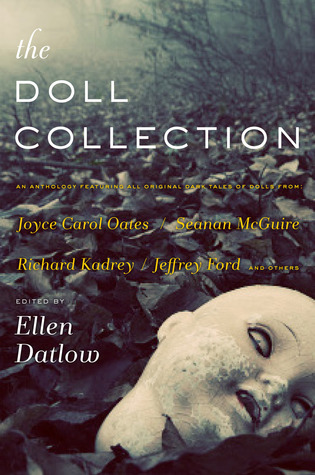
Ellen Datlow news

A few things related to Ellen Datlow’s work have been released in recent days:

The Best Horror of the Year volume four- Table of Contents:

  • The Little Green God of Agony Stephen King
  • Stay Leah Bobet
  • The Moraine Simon Bestwick
  • Blackwood’s Baby Laird Barron
  • Looker David Nickle
  • The Show Priya Sharma
  • Mulberry Boys Margo Lanagan
  • Roots and All Brian Hodge
  • Final Girl Theory A. C. Wise
  • Omphalos Livia Llewellyn
  • Dermot Simon Bestwick
  • Black Feathers Alison Littlewood
  • Final Verse Chet Williamson
  • In the Absence of Murdock Terry Lamsley
  • You Become the Neighborhood Glen Hirshberg
  • In Paris, In the Mouth of Kronos John Langan
  • Little Pig Anna Taborska
  • The Ballad of Ballard and Sandrine Peter Straub

The book is officially out May 1st but is already available for pre-order at the Night Shade website.

Ellen has also released the full list of Honorable Mentions for 2011, which includes 608 stories. That list can be found here: http://ellen-datlow.livejournal.com/tag/honorable%20mentions%202011

And finally, Ellen has put the call out for submissions of published horror for Volume 5. Anything published in 2012 is eligible and she’s reading now. Details here: http://ellen-datlow.livejournal.com/390971.html

.